1 dic 2025
Inaugurazione del 163° Anno Accademico
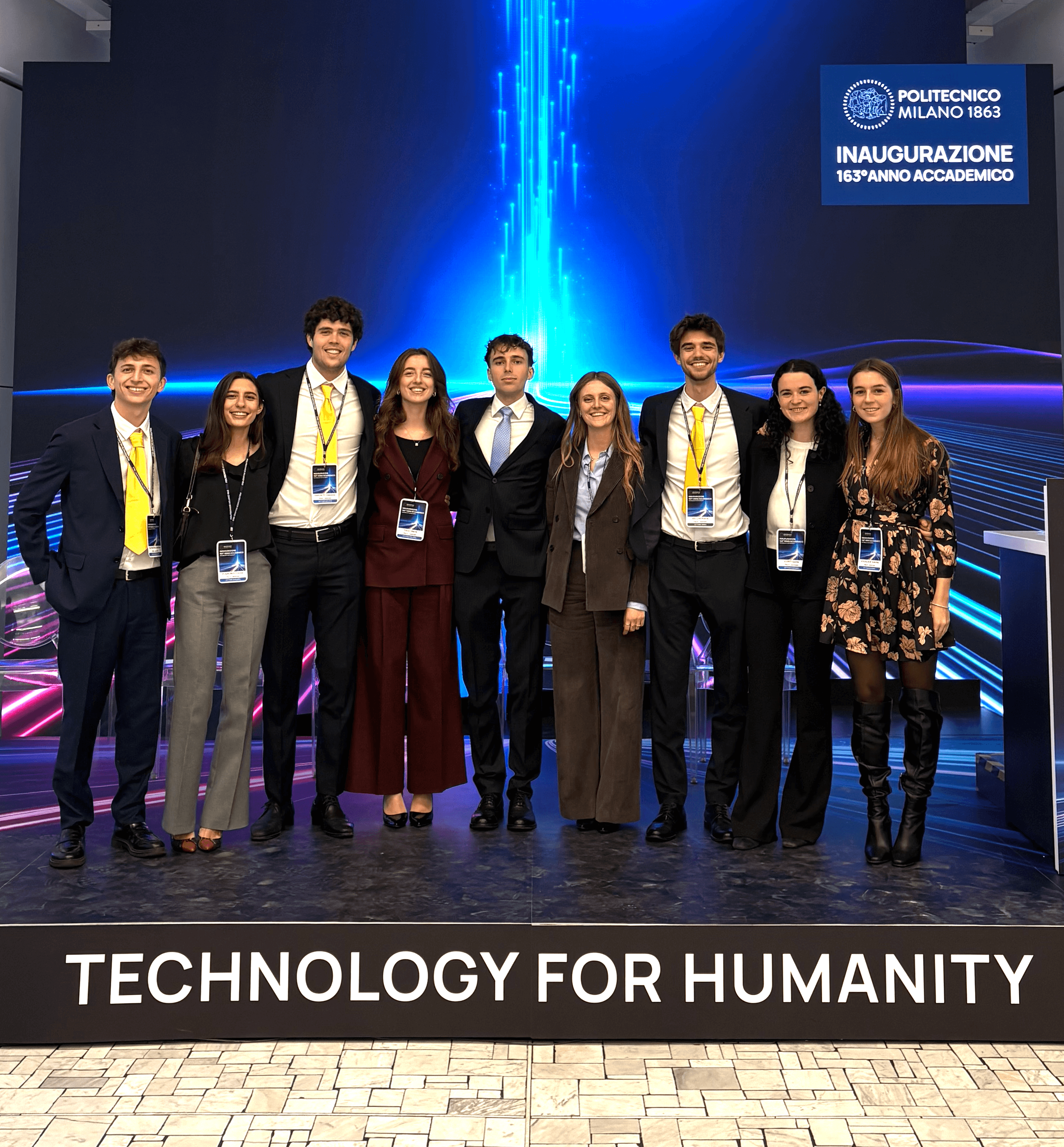
Ecco la trascrizione del discorso tenuto da Michi durante l'inaugurazione dell'anno accademico:
"Nel tentativo di descrivere le prospettive degli studenti, vorrei partire riconoscendo le esperienze di bellezza e positività presenti nella nostra vita universitaria. Non per censurare i problemi, ma perché ritengo che essi si possano affrontare e superare, solo se si pensa che un miglioramento dell’università sia davvero possibile.
La speranza di un cambiamento nasce dall’incontro con una positività. Tale incontro può assumere diverse forme: il rapporto con un professore che ci fa appassionare a una materia, o il condividere con un compagno di corso la bellezza e la fatica dello studio.
L’università è il luogo in cui si tramandano e rinnovano la conoscenza e la cultura, e ha innanzitutto la responsabilità di educare i giovani; che non significa solo formare, ma favorire la crescita di tutti gli aspetti della persona, che aiuti a diventare uomini e donne "a tutto tondo". Sono perciò fondamentali una didattica, dei servizi e un approccio alla vita universitaria che abbiano al centro l’attenzione alla persona.
Papa Leone XIV nell’omelia della Messa con le Università Pontificie ha detto:
“Educare è aiutare qualcuno a essere sé stesso, a maturare una coscienza e un pensiero critico autonomo. […] Chi studia si eleva, allarga i propri orizzonti e le proprie prospettive, per recuperare uno sguardo che non si fissa solo in basso, ma è capace di guardare in alto: verso Dio, verso gli altri, verso il mistero della vita. Questa è la grazia dello studente, del ricercatore, dello studioso: ricevere uno sguardo ampio, che sa andare lontano, che non semplifica le questioni, che non teme le domande, che vince la pigrizia intellettuale e, così, sconfigge anche l’atrofia spirituale” Fine citazione
Cosa può favorire questa prospettiva nella didattica?
Come si sostiene l’attenzione alla persona?
Attraverso le relazioni e i rapporti
La ricerca, la scoperta e l’apprendimento, dipendono totalmente da un rapporto umano: non possiamo imparare senza maestri che ci insegnino. Il cambiamento in noi, quindi, può venire solo dall’incontro e dal confronto con la novità e la diversità. Per questo, le università sono e devono continuare a essere, luoghi di dialogo, di rapporti, di cultura, per creare un ambiente che stimi il nostro percorso di crescita.
Ciononostante, abbiamo anche riscontrato diversi problemi in questi anni di università, e io vorrei innanzitutto sottolinearne uno, ossia la solitudine. Questo è forse l’aspetto più emblematico della mia generazione: sentirsi soli, essere soli pur trascorrendo gran parte delle giornate in un’aula con altri 100 ragazzi. Ci sono persone che vivono questi anni di studio senza stringere amicizie o instaurare rapporti significativi, ma non mi riferisco solo a questo, c’è, secondo me, un aspetto di questo tema strettamente legato a una tendenza propria del pensiero dominante: ossia l’individualismo. L’individualismo è il grande rischio che corriamo di concepirci isolati e autosufficienti, come persone che possono sopravvivere anche in compartimenti stagni, senza bisogno di nessun altro.
Invece non è così, la nostra natura stessa di uomini ci porta a comunicare, a partecipare della vita degli altri, a legarsi e a concepirsi sempre in rapporto con altri individui. Noi non esistiamo al di fuori della relazione con la realtà e con le persone che ci circondano; io sono tale, sono me stesso anche in quanto frutto dei contesti e delle circostanze che ho attraversato, delle persone che ho incontrato, di come i miei genitori mi hanno educato.
L’altro dramma che negli anni è diventato sempre più vicino a noi, e impossibile da ignorare, è la guerra. Nel nostro contesto non ci sono guerre “vicine”, in questo senso la violenza è meno visibile, ma c’è e trova terreno fertile sotto altre forme: la divisione, l’odio, e la disunità. Davanti alla sofferenza, viene naturale reagire voltando le spalle, schierandosi da una parte o dall’altra e puntando il dito. Tuttavia questa dinamica, (spesso) fa passare in secondo piano ciò che andrebbe davvero guardato: il grido, le ferite e i drammi sia dell’aggredito che dell’aggressore. Perché non c’è cosa più difficile che vincere i nostri sentimenti di antipatia e di odio, e riconoscere che tutti hanno bisogno della compagnia positiva che citavo prima.
La posizione più ragionevole di fronte al desiderio di pace che abbiamo tutti la abbiamo avvertita nel Cardinale Pizzaballa, il quale fa appello alla “pace dal basso”. Cioè una via, spesso trascurata, che passa non solo per la politica, ma per come ognuno di noi risponde nel quotidiano all’odio e alla divisione. Per l’esperienza che viviamo in università, pensiamo che essa si possa costruire anche qui, soprattutto qui, e ciò è possibile solo se si continua a parlare di pace e a desiderarla.
Diventano allora fondamentali realtà come le associazioni studentesche, luoghi vivi che arricchiscono la comunità accademica, e che l’università deve essere in grado di favorire, non solo attraverso contributi economici come il Bando per le Attività Culturali.
L’università è il luogo dove guarire la solitudine, contrastare l’individualismo e costruire la pace. Ma come ciò diventa possibile? Grazie a una compagnia, delle amicizie e dei rapporti veri, che rendano il nostro Ateneo una comunità sempre più viva, tesa alla verità e alla crescita delle persone che ne fanno parte.
Concludo (esprimendo) un desiderio: che si investa su di noi. Gli esempi virtuosi a questo proposito ci sono, ma spesso non bastano. L’impegno dell’Ateneo a garantire la borsa DSU a chiunque ne abbia diritto, risponde ad un bisogno che la politica non guarda da troppo tempo. La costruzione del campus La Goccia è frutto della cooperazione tra Università, Comune, Regione e Stato: perché non mettere questa stessa cooperazione al servizio anche di tutti gli studenti fuorisede che sono sempre più (sono) in difficoltà nel vivere a Milano?
Puntate quindi su di noi, sfidateci e rischiate assieme a noi: per fare un gesto concreto di fiducia nel futuro, di speranza per le nuove generazioni, e di apertura, perché i problemi di cui ho parlato finora possono essere risolti, devono essere risolti solo insieme, solo dentro un percorso di compagnia e unità."
🇬🇧 ENGLISH VERSION 🇬🇧
"In attempting to describe the students' perspectives, I would like to begin by acknowledging the experiences of beauty and positivity present in our university life. Not to censor the problems, but because I believe that they can only be addressed and overcome if we believe that improvement in the university is truly possible.
The hope for change comes from encountering positivity. This encounter can take many forms: a relationship with a professor who inspires us to become passionate about a subject, or sharing the beauty and hard work of studying with a classmate.
The university is the place where knowledge and culture are handed down and renewed, and its primary responsibility is to educate young people. This does not mean only training them, but also fostering the growth of all aspects of the person, helping them to become well-rounded men and women. Therefore, teaching, services, and an approach to university life that focus on the person are fundamental.
Pope Leo XIV said in his homily during Mass with the Pontifical Universities:
"To educate is to help someone to be themselves, to develop a conscience and independent critical thinking. [...] Those who study elevate themselves, broaden their horizons and perspectives, to regain a gaze that does not fixate only on what is below, but is capable of looking up: towards God, towards others, towards the mystery of life. This is the grace of the student, the researcher, of the scholar: to gain a broad perspective, one that can see far, that does not simplify issues, that does not fear questions, that overcomes intellectual laziness and, in doing so, also defeats spiritual atrophy." End of quote
What can promote this perspective in teaching?
How can we maintain our focus on the individual?
Through relationships and connections.
Research, discovery, and learning depend entirely on human relationships: we cannot learn without teachers to instruct us. Change within us, therefore, can only come from encountering and engaging with novelty and diversity. For this reason, universities are and must continue to be places of dialogue, relationships, and culture, creating an environment that values our path of growth.
Nevertheless, we have also encountered several problems during these years at university, and I would like to highlight one in particular: loneliness. This is perhaps the most emblematic aspect of my generation: feeling lonely, being lonely even though we spend most of our days in a classroom with 100 other students. There are people who go through these years of study without making friends or establishing meaningful relationships, but I am not referring only to this. In my opinion, there is an aspect of this issue that is closely linked to a tendency inherent in the dominant mindset: individualism. Individualism is the great risk we run of conceiving of ourselves as isolated and self-sufficient, as people who can survive even in isolated compartments, without needing anyone else.
But this is not the case. Our very nature as human beings leads us to communicate, to participate in the lives of others, to form bonds and to always conceive of ourselves in relation to other individuals. We do not exist outside of our relationship with reality and with the people around us; I am who I am, I am myself also as a result of the contexts and circumstances I have experienced, the people I have met, and how my parents raised me.
The other tragedy that has become increasingly close to us over the years, and impossible to ignore, is war. In our context, there are no ‘nearby’ wars, so in this sense violence is less visible, but it exists and finds fertile ground in other forms: division, hatred, and disunity. When faced with suffering, it is natural to react by turning our backs, taking sides, and pointing fingers. However, this dynamic (often) overshadows what should really be looked at: the cries, wounds, and tragedies of both the victim and the aggressor. Because there is nothing more difficult than overcoming our feelings of dislike and hatred and recognizing that everyone needs the positive companionship I mentioned earlier.
The most reasonable position in the face of the desire for peace that we all feel was expressed by Cardinal Pizzaballa, who calls for “peace from below". That is, a path, often overlooked, that passes not only through politics, but through how each of us responds to hatred and division in our daily lives. Based on our experience at university, we believe that this can also be built here, especially here, and this is only possible if we continue to talk about peace and desire it.
This makes student associations, lively places that enrich the academic community, fundamental, and the university must be able to promote them, not only through financial contributions such as the Call for Cultural Activities.
The university is a place where loneliness can be healed, individualism can be countered, and peace can be built. But how is this possible? Thanks to companionship, friendships, and genuine relationships, which make our university an increasingly vibrant community, striving for truth and the growth of the people who are part of it.
I conclude by expressing a wish: that we be invested in. There are virtuous examples in this regard, but they are often not enough. The University's commitment to guaranteeing the DSU grant to anyone who is entitled to it responds to a need that politics has ignored for too long. The construction of the La Goccia campus is the result of cooperation between the University, the Municipality, the Region, and the State: why not put this same cooperation at the service of all non-resident students who are increasingly struggling to live in Milan?
So put your faith in us, challenge us, and take a risk with us: to make a concrete gesture of trust in the future, of hope for the new generations, and of openness, because the problems I have mentioned so far can be solved, but they must be solved together, only through companionship and unity."